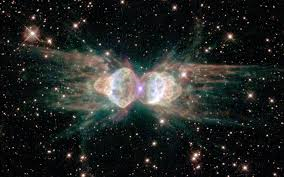
Stories of the Iron Dragons – Discovery of Vhoorl

Administratum Planetary Surveys


Vhoorl Planetary Survey

Binary Star AL-Janubi

Segmentum Obscurus


Personal Log: Donovan Gilman, Lead Planetologist


Planet Vhoorl, strategically located on the edge of Segmentum Obscurus is an earth-like planet in many respects. Atmosphere composed primarily of Nitrogen and oxygen, slightly richer in oxygen than Terra with a gravity approx 4/5s that of Terra.

The planet is majority water with two primary land masses, a northern and southern continent. The ocean separating the continents is primarily salt water.

The Northern Continent has an extensive river system, with eight major drainage basins, all of which drain into the ocean. Two of these basins account for more than half the total drainage area. The largest river system in the Northern Continent originates in a mountainous region and receives tributaries from a basin that covers 45.7% of the continent, principally the north and west. The main river system flows from west to east. Through this basin flows one-fifth of Vhoorls fresh water. This system provides a sufficient supply of potable water for the hive city, Astra Militarum garrison and cooling for the factories.

Although 90% of the continent is within the tropical zone, the climate varies considerably from the mostly tropical North to temperate zones below the 23°27′ S latitude. The Northern Continent has five climatic regions: equatorial, tropical, semiarid, highland tropical, and subtropical.

Temperatures along the equator are high, averaging above 25 °C (77 °F), but not reaching the summer extremes of up to 40 °C (104 °F) in the temperate zones. There is little seasonal variation near the equator. At the country’s other extreme, there are frosts south of the 23°27′ S latitude during the winter and there is snow in the mountainous areas. Temperatures outside the Hive City are moderate (usually between 15 and 30 °C or 59 and 86 °F), despite their relatively low latitude, because of their elevation of approximately 1,000 meters (3,281 ft). The coast has warm climates, with average temperatures ranging from 23 to 27 °C (73.4 to 80.6 °F), but enjoys constant winds. The southern coast has a subtropical climate and temperatures can fall below freezing in winter.

Precipitation levels vary widely. The Northern Continent has moderate rainfall of between 1,000 and 1,500 millimetres (39.4 and 59.1 in) a year, with most of the rain falling in the summer south of the Equator. The region is notoriously humid, with rainfall generally more than 2,000 millimetres (78.7 in) per year and reaching as high as 3,000 millimetres (118.1 in) in parts of the western side of the continent. Despite high annual precipitation, the rain forest can have a three- to five-month dry season, the timing of which varies according to location north or south of the equator.

In contrast to the Southern Continent which rose to elevations of nearly 17,000 meters (55774.3 ft) in a relatively recent epoch and inverted the river flows direction of flow from westward to eastward, the Northern continent geological formation is very old. Crystalline shields cover 36% of the territory, especially its central area. The dramatic granite sugarloaf mountains are an example of the terrain of the shield regions, where continental basement rock has been sculpted into towering domes and columns by tens of millions of years of erosion, untouched by mountain-building events.

The principal mountain ranges average elevations just under 3,500 meters (11482.9 ft). The Murum Mar range hugs the eastern coast, and the Murrum Medius Range, the largest in area, extends through the south-central part of the continent. The highest mountains are in this range, others traverse the northern border.

In addition to mountain ranges (about 0.5% of the country is above 1,200 m or 3,937 ft), the Northern Central Highlands include a vast central plateau (Planalto Central). The plateau’s uneven terrain has an average elevation of 1,000 meters (3,281 ft). The rest of the territory is made up primarily of sedimentary basins.

The Southern Continents  main structural lines show both the east-to-west direction characteristic, at least in the eastern hemisphere, of the more northern parts of the world, and the north-to-south direction seen in the southern peninsulas. The Southern Continent is thus mainly composed of two segments at right angles, the northern running from east to west, and the southern from north to south.

With a heavily grown rainforest and has not been extensively explored at this time. Orbital surveys have shown extremely high mountain ranges circling the central portion of the continent, pictures of which provide the suggestion of jagged teeth biting their way through the planet. The forest canopy prevents the penetration of any light creating a perpetual twilight gloom.

Mean monthly temperatures exceed 18 °C (64 °F) during all months of the year.[5] Average annual rainfall is no less than 168 cm (66 in) and can exceed 1,000 cm (390 in) although it typically lies between 175 cm (69 in) and 200 cm (79 in).[6]

The highest of these peaks reaches nearly 17,000 meters (55774.3 ft). Mons Imperalis as it has been deemed is about two thirds the height of Olympus Mons on Mars.

Inside the ring of mountains, appear the outlines of an ancient city. Preliminary review and exploration by the planetary geologist assigned to the colonization and establishment of munitoriums on Vhoorl indicate the city appears intact and is made of a black rock which may not be native to the planet.

A xeno-archeologist has been requested for further review. All exploration of the Southern Continent has been placed on hold pending his arrival. As a footnote the geologist came down with a strange malady after the visit to the Southern Continent. In his delirium he even decried his faith in the Emperor and was exterminated before further contamination could occur.


Thank you for reading,

Ernest

Foray into Noir

Noir, what is it?

Noir fiction (or roman noir) is a literary genre closely related to hardboiled genre with a distinction that the protagonist is not a detective, but instead either a victim, a suspect, or a perpetrator.

My first foray into the genre is with Once Upon a Mystery. The challenge of it was to create a 1920’s – 1930’s story using fairy tales as a base. I chose a setting comparable to 1929, just before and as the stock market crashed.

I drew the “Three Billy Goats Gruff”. I was almost dismayed when I began researching the story. Of all the uninteresting, straightforward stories, but I decided it was a challenge. There are some interesting points to the story. There were several themes in the story. Greed, patience, cunning, and a few others if you look for them. To incorporate these into the time period was not as difficult as feared once the story was laid out. Adding layers of intrigue to this straightforward story while maintaining its core was the trick.

Following is an excerpt from “Three Billy Goats Gruff: A Noir Fairy Tale”

“Orland squinted as he tilted the bottle. Disappointed with how little remained, he downed it in a swallow; then held it upside down. Where were the answers that were supposed to hide at the bottom?

He knew why there were no answers. He already had them.

It was late and the office echoed. Still, he looked over his shoulder. Billy needed the new medastinum surgery to fix his lungs. Orland had lost his wife. He was not going to lose his son.

Before his last swallow of liquid nerve waned, he made a few quick pen strokes. There! It was finished. Tomorrow, as part of routine processing, a clerk would set up an ongoing transfer of funds to his secret account. He was an honest sort, but the company had refused to help. His salary was just not enough. The evidence was well-hidden and another clerk processing it was the final shield. Even the best auditors would be hard-pressed to track this back to him.”

Stretching my Genres

By now you know I am a new author, sort of, I have been writing off and on for years. Poetry, flash and science fiction/horror but it has only been in the past year and half I have made attempts to market any of my stories.

One question I keep being asked is, when I am going to write a stand-alone book? I am giving it a shot now. A good reason to write short stories is to expand your genres, get a feel for what you like writing, try something new and flex the grey matter.  Shooting for 25,000 – 30,000 word novella for a pocket digest. My goal is to tie at least a couple of my short stories together since they are set in the same world.

So far, I have marketed weird tales, noir, poetry, adventure, mystery, gothic romance/horror, and historical fiction. All of them, except) the poetry, fall into a broader category of pulp. My favorite genre to write so far is the supernatural/weird/horror tale. The only one I have not overly enjoyed writing is the straight historical fiction. I have been told by a couple of beta readers that is really pretty good. I am glad to hear that because it will be a long time before I do another.

The mystery and the noir were fun. It was a murder mystery based on characters by D.L. Champion. The hardest part was coming up with the murder and the solution. Still, I would enjoy writing more about that character. The noir was a satire based on the Three Billy Goats Gruff. It will be out this summer in an anthology called “Once Upon A Mystery” from Beyond The Threshold Studios. I will post some excerpts of it later this week along with an update where it is in the publication process.

Writing in these varied styles gave me a feel for first attempt at a stand alone. And yeah, I chickened out, going for the comfort zone. >grin< As long as I am writing and submitting to Pro Se Productions, which I consider to be my writing home for now, there will always be opportunity to stretch my creative styles.

Thank you for reading,

Ernest


Juggling my Balance

We hear about it all the time. We should have balance between work and play, business and pleasure, etc. Looking at my own life lately it’s not so much an issue of balance as it is juggling.

The balance has several dictionary definitions.

bal·ance

baləns/

noun

noun: balance; plural noun: balances

  1.  

an even distribution of weight enabling someone or something to remain upright and steady.

“slipping in the mud but keeping their balance

  1.  

a condition in which different elements are equal or in the correct proportions.

“overseas investments can add balance to an investment portfolio”

  1.  

an apparatus for weighing, especially one with a central pivot, beam, and a pair of scales.

  1.  

a counteracting weight or force.

  1.  

a predominating weight or amount; the majority.

the balance of opinion was that work was more important than leisure”


  1.  

a figure representing the difference between credits and debits in an account; the amount of money held in an account.

“he accumulated a healthy balance with the savings bank”

verb

verb: balance; 3rd person present: balances; past tense: balanced; past participle: balanced; gerund or present participle: balancing

  1.  

keep or put (something) in a steady position so that it does not fall.

“a mug that she balanced on her knee”

  1.  

offset or compare the value of (one thing) with another.

“the cost of obtaining such information needs to be balanced against its benefits”

So, the definition I believe fits best is under the verb #2 definition

“offset or compare the value of (one thing) with another.”

This is much more descriptive of what I do. Look at deadlines. Sleep, adulting, spend time with my partner, activities solely for my pleasure. All of these must be weighed in what can I trade off for now versus what can I do later.

Really, it all comes down to scheduling proactively, think ahead and rearranging to meet all these pieces you need to make your life work.

Isn’t that juggling?

verb

gerund or present participle: juggling


  1. continuously toss into the air and catch (a number of objects) so as to keep at least one in the air while handling the others, typically for the entertainment of others.
    • cope with by adroitly balancing.

“she works full time, juggling her career with raising children”

  • organize (information or figures) in order to give a particular impression.


“defense chiefs juggled the figures on bomb tests”

So many pieces here seem to fit. All of these plates in the air at once. And ol’ Murphy always comes along to throw another plate, pin, or maybe a chainsaw into the mix.

Whatever Murphy tosses at me I try to stay calm with it. Getting upset or angry at unforeseen circumstance I always thought was a waste of energy. No the other piece of juggling my balance is adapting. Take time to prioritize the items on my to-do list. Do my best to make a plan. Try to follow the plan and wait to see what survives of it once the day begins.

Now if I just didn’t have to sleep…

Thank you for reading,

Ernest


Researching stories

Learning is a pleasure of mine, and researching stories is a portion of the fun writing them. So many things to learn and you know the hardest part for me? Knowing when I should stop. Researching is often a rabbit hole and forms a part of the problem for me of procrastination.

Research is an important part of writing but remember time spent researching is not time spent writing. Right now I am working on a weird jazz story. The story must have jazz at its core but an element of the weird or supernatural.

It is always good for research to be focused. Knowing Who, What, Where and Why of your story is a good start. But expanding on those ideas is important and to do that you have to know what pieces you need to research in order to expand your initial ideas into a story.

Several of my stories have had essential elements based in history or real locations. Ned Land vs. The Kraken Cult had a lot of research into the whaling industry and culture of whaling in the 19th century.  A burst of inspiration added a character midway suddenly needing research into children’s attire and customs. The Australian Gold rush was a topic in Birds of a Feather.

And because research can be fun, after this is not a term paper, one piece of information or topic always leads to another, and another and the rabbit hole of the internet can be bottomless.

  1. Common wisdom is performing your research first.
    1. I certainly perform a good deal of preliminary research but by no means all of it. Mainly because I cannot anticipate everything I may run into as I write, perhaps as I gain experience this will change. For now though, if I run into a question I sop and research it.
  2. Prioritize your research.
    1. You have the idea, but is it plausible? What do you need to get started? This is the overview research I begin with, my concept. For a recently completed historical fiction, Winter Tales, the concept is about the first journey of a Viking Merchant. There are plenty of stories about Viking raiders and plunderers but they were also merchants. I used archeology articles and historical documents. It was easy to confirm the concept.
  3. Visit the library.
    1. There is a lot of information there. It can do you some good to get out from behind your computer. I have found it is often easier to focus on one research topic doing this too.
  4. The internet these days puts almost anything within reach of a creative search.
    1. It is also my favorite rabbit hole. Since I have a hard time knowing when to stop I will often set an alarm. It usually works. A time limit helps me focus on the needed research and provides me a stopping point. Do I always listen? Well, not always.

Right now, as mentioned I’m writing a weird jazz short story. The research need I have now? How a jazz playing mystical guardian deals with physical threats. As the old D&D saying goes, the answer to any magic user is cold steel. But what about fangs?

Thanks for reading,

Ernest


Thank you for following When My Worlds Collide

Thank You for reading my blog. There are an incredible number of choices and you chose to follow my blog as one of yours.

Five more have joined in following me. My warmest welcome to the following:

lloydsr
simplisticinsights
KylaRoss
Ricardo Sexton
Dr. Joseph Suglia


I appreciate your reading and I look forward to reading more from each of you. From reviewing your sites I can see I have a lot to learn, both from you as artists and from presentation of my own site.

Thank you for reading,

Ernest

Flash Friday – Defender

Defend the innocent; protect it from those who feed on it. To be best friend and confidant, to nurture imagination, this is my duty. When innocence is taken for naught and is lost unnaturally then the pact is to avenge.

Today, I became a part of the pact. I was chosen by a vessel of innocence. By my wards choice, I am always by his side.  By day we play games, act out adventures and explore our world. By night I stand vigilant watch.  Until the fateful night came to pass and the chosen victim is my child.

It’s out there, just beyond the ring of light. I can sense it in the deepest shadows of the room. As long it stays out there, vigilance is my only defense. According to the lore they feed on innocence. The very innocence I am here to protect. It has to make contact. As long as I can keep it from reaching the child before daylight innocence will survive.

There, making its move, showing itself. The Nightmare is a creature of the aether bringing bad dreams, sustaining itself off the fear generated. Charging me, I barely manage to deflect blows from those silver hooves. We sparred, each blocked blow a drain, my strikes making no mark.  My strength alone will not be enough. My hope and goal is to distract him until daylight.

Drawing on an arsenal of innocence and heroic imagination, bring forth our x-wing. My goal to distract him until daylight began zooming around the Nightmare, as horsefly does a horse. The blasters leave marks across the flank. The first effective offensive move I have landed. Whinnying in pain The Nightmare strikes back. Continue dodging and shooting until a lucky tail strike and the x-wing disintegrates. Safely ejecting, landing in a three-point Ironman style leaves me in a bad position.

Reaching deep into the child’s most heroic image, I draw on all of his innocence to defeat The Nightmare. A shimmering as my armor forms, a paladin with sword and shield. As I draw my sword of truth, the shield emblazoned with the trident on my arm, I face off with my foe. As I change so does the Nightmare. Now a Charger from a joust, mocking me, it paws at the floor.  Trying to scare me, play me out. Rising onto its rear legs, the charge begins. This deadly game of chicken can have only one ending. Sinking to one knee as it passes, my sword of truth slices through its body of lies. Slowly fading back into the aether, I return to my place by my child.

For I am Bear; Teddy Bear, protector of innocence.

Thank you for reading,

Ernest

DEATH

This is a topic all writers handle in different ways. Writers are known for is killing characters. Some writers even seem to make a career of it, yes, I’m looking at you Mr. Martin. Death has certainly occurred in several of my stories and I have been threatened upon pain of death if I killed particular characters. In one my first stories published, “Birds of a Feather”, a teacher friend and my editor were both very pleased with the obvious depth of relationship between the main character and his mule. As far as we know the mule survived.

Sometimes, dying might have been a better option. In a gothic horror/romance, this was my most Lovecraftian story, a young lady was meant to be a sacrifice. My editor pleaded and cajoled for me to allow her to live. Yes, she survived. But sometimes, dying might have been preferable to her new quality of life. And yes after the re-write, my editor agreed, the young lady would have been better off dead.

As a writer, part of making the characters come alive for the reader is in making them relatable. For that to happen most of us turn to our own experiences. There have been deaths in my life, any of us who life very long on this Earth will have the experience of a pet, a friend, loved one, or other family member passing from this mortal coil. One death which struck me particularly hard was loss of a pet.

When we met, my partner had two cats. Both have died during the nine years we have been together. One was an older orange tabby named Scutter; the other a tiger-striped named Cheshire. Scutter and I bonded strongly over six years until her stroke. Her quality of life dropped instantly and within forty-eight hours we decided to euthanize her. It was my privilege for her to curl in my lap as two drugs were administered. The first was a muscle relaxant meant to slow her heart and ease any pain, its effect was unmistakable. Within a minute she relaxed in a way that way only a cat is able too. Being a part of my life daily, I knew she was getting older and had begun to endure physical ailments, yet in the daily progression of aging I had not realized how much had her physical being had deteriorated. It dawned upon me how long it had been since I heard her purr; my heart broke when she did. In those seconds of relaxation, I appreciated just how much of a struggle daily life had become for her. For the briefest of moments, in full selfishness, I did not want the second drug administered. The wonderful and caring veterinarian administered the second drug, the one to stop her heart. I caressed her until death came. It was as if one moment she was there, the next she wasn’t. I recall saying she was gone and the veterinarian saying it usually took longer. She listened for a heartbeat. There was none. My friend was gone.

I called the office and reported out sick. I cried. For two days I cried a lot. My partner and I both did. When we give to something with a lifespan shorter than ours, and it gives back to you unconditionally, losing that bond can be a devastating blow. Three years later we have our moments of  what has become known as a “small orange sad”.

That is one of the well springs I draw upon when I wrote about the death of a character. Feeling numb, maybe a bit of shock at the loss, and how I related to people and I try to imbue my characters with some of it.

Sometimes Death is handled by being a character. Death has been a favorite of mine since Ingmar Berman’s “The Seventh Seal”. Terry Pritchett’s character of Death is one I always enjoy. Truly trying to understand the poor mortals he so meticulously watches over. Really, Piers Anthony’s personification of Death from “On a Pale Horse”, a part of the Incarnations of Immortality series, where Death is a job, is probably my favorite. After reading it, I wanted his job.

Death, the character, allows the writer to create a little distance in the narrative. Perhaps it allows us to see or show a different, maybe more objective, perspective on a situation. Death can be many things in this way: a friend, a hunter, a businessman, travel agent, or teacher as needed for story. Often personifying Death gives the freedom for a narrator to be present, to alleviate or create a fear factor.

In one of his essays, H.P. Lovecraft wrote, “The oldest and strongest emotion of mankind is fear, and the oldest and strongest kind of fear is fear of the unknown”. What, pray tell, is more unknown than death? Religions, not touting any one over any other, all have an answer regarding death. Some people seek out a deity when it is believed death is imminent.

Whether a writer treats Death as part of a life cycle, a force of nature, a person, or an agent of fear one thing is certain. Death is now and will likely always be one of my favorite plot devices.

Thank you for reading,

Ernest

P.S. One of my goals is to write everyday. I did begin this on 3/16/2017 though currently there is an illness in the house which cause unavoidable delays. Flash Friday will be posted later in the day.

Good night

In Celebration of the Dawn

He approaches

Gently lighting his way

With a soft,

Rosy, hue,

So as not to disturb

His sleeping bride.


At his caress

She soflty whispers

His name.


Life

Slowly,

Opens her eyes.

They sparkle lightly

In the warming glow

Of his hand.


Tenderly,

Reaching out

They join

In loves embrace.


He

Warming her soul

Stirring life

Within her breasts.


She

Pulling him forward.

Defining,

Giving purpose

For his existence.


Together

Bringing hope,

Life and love

Once again

To seekers

 such as we.

Why do we tell stories?

In my anthropology classes I learned all cultures tell stories. Why were they everywhere? The earliest were probably teaching tools passing vital information which kept us alive. One example I recall a favorite professor gave during one of his lectures went something like this:

We do not know what kind of language early man had but think about one of our intrepid hunter-gatherer ancestors out in the forest, and Buddy comes along for the excursion. Buddy got hungry so he ate some pretty berries. Then Buddy got cramps, doubled up, made faces and noises, then Buddy died.

Our ancestor shares this information with other members of the tribe and shares the whole scene. That means he included all the noises and faces, that he could not do anything. By involving the effects, eliciting any emotions such as fear, our ancestor engaged his audience. Probably made a more lasting impact than, “Ugh, pretty berry bad.” Highly hypothetical and improbable but it’s a guess.

Our brains have a capacity to generate imagined experiences. It’s why when Tolkien describes a Hobbit Hole, you generate an image. And you can generate more than images, you can generate emotions. Between images, emotions and experience we imagine based on an authors words Horror stories can scare you, adventures can have you on the edge of your seat, or you can laugh at some described bit of humor.

Our minds find ways to relate, to put the story, conscious or not, in a context to which we can relate. The author relates one way, I know what I meant when I wrote a poem or a passage in a story. As the reader/listener you may relate in a completely different manner.

Why? Our life experiences are different. Each of us brings our unique perspectives to the same story. The mind translates into ways allowing each of us to draw a meaning which fits where/when we are in our lives at the time we read it. A personal example would be reading Cather in the Rye by Salinger in High School. When I read it again about 10 years later, I found a very different message. Bet you are recalling a similar experience now.

Not too long ago as life happens, someone told me a piece I wrote spoke to them. The piece was “Daily Options”, a poem about my struggles with Depression I shared in “When the Shadow Sees the Sun: Creative Surviving Depression” a memorial to an author I got to know briefly. Their insight was not what I thought the piece was about, but that is okay. You see, they found a meaning in it based in their life. I was told it helped them make a decision, decide on an option. If I never receive another compliment, that’s the highest you can receive. That it was not what I thought the piece meant is great, that means to me the words were alive and relatable for them

Never worry about what Art and literature is supposed to say. It will speak to all us, if we listen. What Starry Night or Stanger in a Strange Land or Watership Downs says to each of us is a message from the art to us as individuals. I put words on a page, other friends of mine are amazing artists and authors, yet regardless of what we create, it is you, the beholder, who gives us and our work meaning.

Together we are the singers, we are the song, listen to the music and dream as only you can. You are the one who gives it all meaning.

Thank you for reading,

Ernest

When the Shadow Sees the Sun: Creative Surviving Depression can be found on Amazon.com. https://www.amazon.com/When-Shadow-Sees-Sun-Depression/dp/1539868877/ref=sr_1_1?s=books&ie=UTF8&qid=1489549733&sr=1-1&keywords=When+the+shadow+sees+the+sun